Roseanne Orozco murder case’s unsolved status
Day of the DeadRoseanne Orozco’s murder remains unsolved for more than thirty years, leaving her family without an answer and exposing how institutional neglect can turn a killing into a lasting absence from public attention. The case’s failure is not presented as a simple lack of clues: witnesses tried to speak, the investigation was constrained by jurisdiction and scarce resources, and the family’s account of Roseanne’s disappearance did not receive meaningful attention. When Emma Orozco finally asks Brandon Walker to help, the old case becomes an inquiry into both what happened to her daughter and why earlier efforts failed.
The Unsolved Case and Its Limits
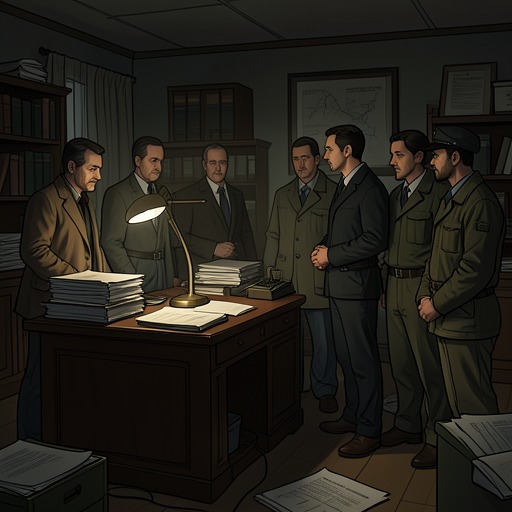
Emma tells Brandon that Roseanne was murdered in 1970 and that the killer was never caught. The body had been found along the highway beyond Giwo Tho’ag, cut apart and placed in a box. Brandon recognizes the case as the killing of the young woman found in an ice chest near Quijotoa. At the time, he was working homicide for the Pima County Sheriff's Department, but another investigator received the call; Brandon had already been occupied by a different reservation homicide and did not follow the Orozco investigation’s outcome.
The location and presumed identity of the killer shaped which authorities were expected to investigate. Although the murder site itself was never found, investigators assumed Roseanne had died on the reservation and that the perpetrator was Native. The case therefore fell to federal or tribal authorities rather than the county department. Brandon recalls that investigations into reservation murders could be cursory, while the local tribal police lacked training, equipment, and money. In this case, the Papago Tribal Police Force was called, but its investigation produced no resolution. Those overlapping jurisdictional limits and material shortages help explain how the case went cold; they do not establish who killed Roseanne.
A further unresolved question concerned Roseanne’s pregnancy and the identity of the child’s father. Because no boyfriend was known, the tribal police suspected that Henry Orozco had abused his daughter. Emma said that Henry was deeply upset when the suspicion was raised, as was she. Investigators could not prove or disprove the allegation, and DNA testing was not then available to establish paternity as readily as it would be later. Henry was never tried, but neither was he exonerated. After the investigation stalled, he was willing to leave the matter alone; after his death, Emma chose to reopen it.
A Disappearance Before the Murder
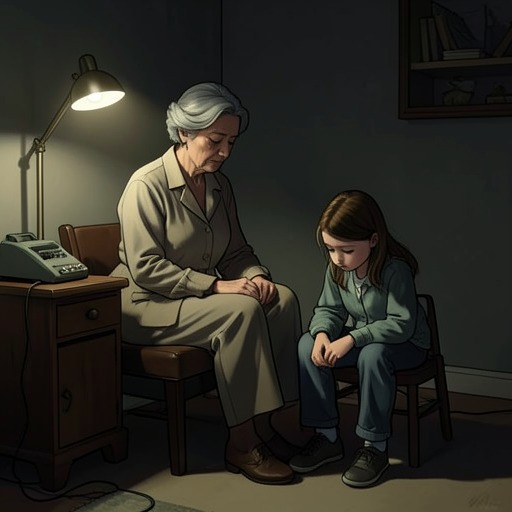
Andrea Tashquinth’s recollections place Roseanne’s vulnerability well before her disappearance. On Roseanne’s first day at school, she became frightened when she could not remain in the same class as Andrea. The principal took her away to an unlit coat closet while Andrea protested and followed them. When Andrea saw Roseanne again after school, Roseanne would not speak. She never spoke again, including to her family, and later did not answer questions or complete schoolwork. Doctors in the area and in Phoenix found nothing wrong; a medicine man also could not help her.
Andrea was sixteen when Roseanne disappeared. She remembered that Roseanne had been ill after an appendectomy and was later admitted to the Indian Health Services Hospital for tests. When Henry arrived after work to take her home, Roseanne was gone. The family assumed she had walked out; the next week, her body was found in an ice chest beside the road. Andrea suspected that someone at the hospital might have been involved, perhaps a staff member or a visitor, but she did not identify a perpetrator. She had tried to tell the authorities what she thought. They were not interested in her opinion, in part because they already suspected Henry. Her account therefore raises a possible line of inquiry rather than resolving the crime.
Testimony and the Cost of Being Dismissed
Andrea says that she tried to tell the tribal police that the hospital might be relevant, but no one listened. Her age—sixteen at the time—helped make her testimony easy for officials to disregard. The same imbalance marks the case more broadly: the investigation depended on witnesses whose observations were not given serious consideration, while the family was left with assumptions that could neither establish Roseanne’s movements nor identify the person responsible. Andrea’s memories recover a specific sequence—illness, hospital admission, a failed pickup, disappearance, and discovery the following week—that had not become a productive investigative lead.
The silence surrounding the case is also personal. Emma delayed speaking about her daughter because Henry had wanted them to forget the past. After his death, she explains that she wants to know what happened. Brandon understands the persistence of parental loss from his own experience of losing a child, and he recognizes that the subject remains painful for Emma decades later. He does not press her with blunt questions; he observes that she has waited a long time and lets her choose what to disclose. In the Tohono O’odham setting, his restraint reflects the importance of avoiding direct questioning when it would be impolite, while giving Emma room to speak about a death she has carried for years.
Reopening the Inquiry
Fat Crack Ortiz sends Emma to Brandon because he believes The Last Chance may be able to help investigate old murders. Brandon agrees to assist as far as he can. One possible source is the hospital’s computerized health records: a study funded in the early 1990s had entered existing records, including material dating back to the 1950s, and Roseanne’s July 1970 appendectomy record might therefore still be accessible. Yet the existence of a database does not guarantee access. Brandon expects that hospital staff may refuse to provide information to him, and hopes Emma will not meet the same resistance.
When Emma later says the hospital has denied that Roseanne was ever admitted, she points to her own records as evidence that the explanation of lost records is inadequate: the hospital could produce records of her stays for Andrea’s birth, Roseanne’s birth, and a hysterectomy. The discrepancy strengthens Emma’s belief that someone at the hospital was involved, but it does not by itself prove that Roseanne was admitted or that a hospital employee caused her disappearance. The distinction between suspicion and proof remains central to the case.
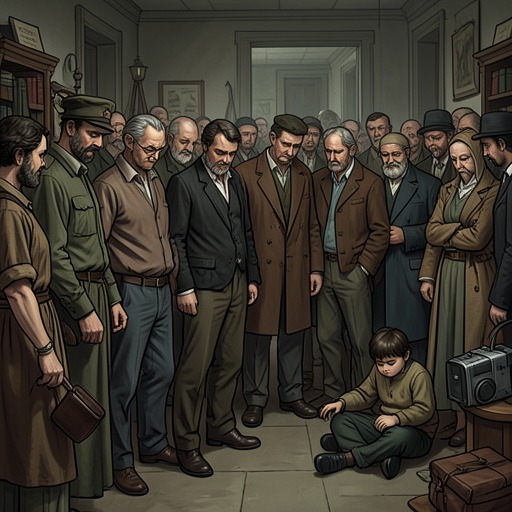
The investigation also encounters a conflict between obtaining information quickly and preserving evidence that could be used in court. Emma arranges for Sam Tashquinth and her grandson to exhume Roseanne’s baby after dark, without first seeking permission from the tribal council because she believes the formal process would take too long. The action may produce a route toward testing, but Brandon recognizes that bypassing authorization compromises the chain of evidence. As a member of The Last Chance rather than a sworn police officer, he is caught between the urgency of helping a bereaved family and the need for reliable, legally usable proof.
Continuing Significance
The case remains an open question rather than a solved mystery: Henry’s status as a suspect was never settled, Andrea’s hospital concern was not properly pursued, and the available records and remains raise investigative possibilities without establishing guilt. Its history shows how jurisdictional boundaries, limited investigative capacity, and the dismissal of witnesses can reinforce one another. Emma’s decision to speak after decades of silence does not undo those failures, but it changes the case’s direction. The unresolved murder is no longer only an old file; it is a demand, made by Roseanne’s mother, that the unanswered questions be heard again.